
University of St Andrews Reduced HVAC Electricity Consumption by 21% with AI-Driven Optimization
At the University of St Andrews’ Gatty Marine Laboratory, EcoAI Technologies and Myrspoven deployed AI-driven HVAC optimization to evaluate how additional energy savings could be achieved within an already advanced building environment.
Using Myrspoven’s AI optimization platform, myCoreAI, the project achieved a verified 21% reduction in HVAC electricity consumption across the April 2025 to April 2026 reporting period, compared with a weather-normalized baseline. The project also delivered a 9% reduction in heat consumption.
In total, the site achieved measured energy savings of more than 158 MWh, equivalent to an estimated operational carbon reduction of 29.3 tCO2e.
A Research Facility with an Advanced Building Management System
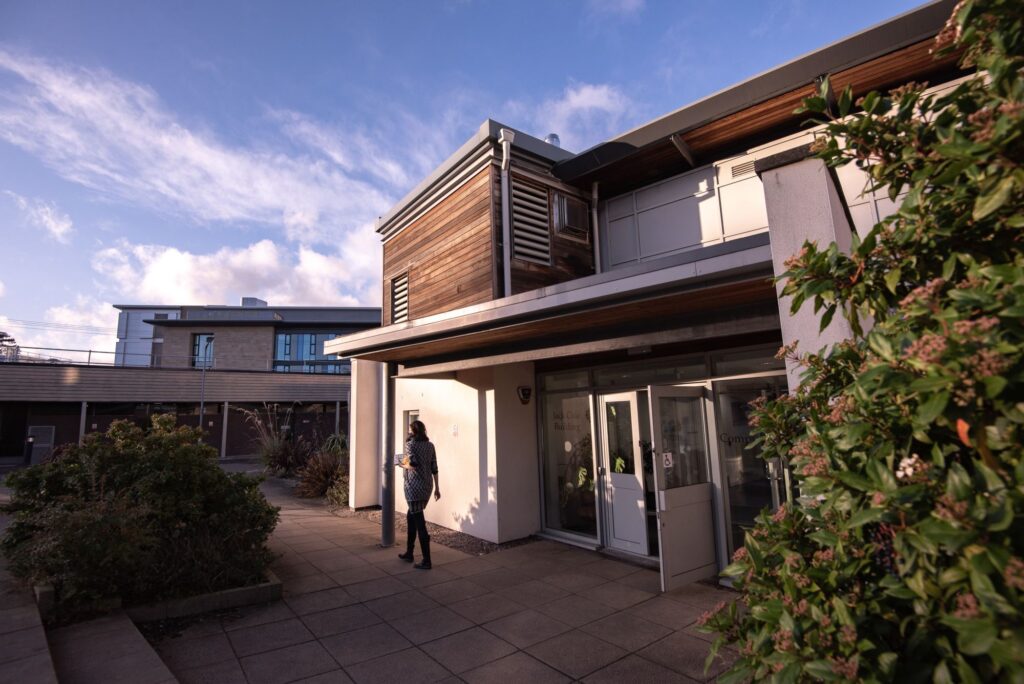
The Gatty Marine Laboratory is part of the University of St Andrews’ Scottish Oceans Institute and supports research focused on marine science and environmental studies.
The building already operated with a Siemens Desigo CC Building Management System (BMS), providing a strong baseline from which to evaluate whether additional energy savings could be achieved without replacing existing infrastructure.
Amanda Cook, BMS Manager at the University of St Andrews, said the project focused on “strengthening the existing Desigo CC system rather than replacing it.”
Rather than replacing the existing BMS, myCoreAI was deployed alongside it as an optimization layer. The Desigo system continued controlling the mechanical plant, while myCoreAI continuously adjusted operating setpoints through 15-minute optimization cycles based on live building conditions and forecast demand.
Deployment was completed without disruption to building operations or any requirement for additional hardware upgrades. Michal Rosa, BMS Project Engineer at the University of St Andrews, described the rollout process as “straightforward and scalable,” despite initial IT concerns.
Measured Energy Savings Across the Reporting Period
Performance was analysed using weather-normalized reporting across the April 2025 to
April 2026 monitoring period.
The results showed:
- 21% reduction in HVAC electricity consumption
- 9% reduction in heat consumption
- More than 158 MWh of total measured energy savings
- Approximately £14.4k in measured gross financial benefit
- Approximately £10.4k in net benefit after annual subscription costs
- Estimated operational carbon reduction of 29.3 tCO2e
The monthly reporting profile demonstrated consistent savings across the year, with performance strengthening as the system continued learning the building’s operational patterns and thermal behaviour.
The project also showed that meaningful energy reductions can still be achieved in buildings that are already professionally managed and equipped with advanced BMS infrastructure.
Amanda Cook said the results demonstrated “measurable improvements in energy use and internal conditions,” reinforcing the value of using AI to enhance an existing BMS environment.
Supporting Existing Building Infrastructure with AI
The project demonstrates how AI-driven optimization can work alongside existing building systems to improve operational efficiency without replacing core infrastructure.
For the University of St Andrews, the Gatty Marine Laboratory now serves as a practical example of how AI can support ongoing energy and carbon reduction goals while maintaining stable building operation and occupant comfort.
The project demonstrated that:
- AI-driven optimization can deliver measurable savings in buildings with advanced
- BMS systems already in place
- Significant reductions in HVAC electricity and heat consumption can be achieved without replacing existing infrastructure
- Energy and operational savings can be achieved while maintaining stable indoor conditions
- Existing building systems can achieve additional efficiency improvements through continuous optimization
The year-one results now provide a foundation for evaluating wider rollout opportunities across additional buildings within the University estate.
Michal Rosa said allowing AI models to optimize building performance using “local weather forecasts, usage patterns and building heat-retention characteristics” creates new opportunities to reduce energy consumption and operational carbon emissions.
Sources:
Further Reading:
About Myrspoven
Myrspoven AB is a pioneering force within energy optimization, dedicated to revolutionizing the way buildings harness and consume energy. With a deep commitment to sustainability, Myrspoven leverages cutting-edge AI technology and innovative solutions to create more efficient buildings, consuming less energy, as well as contributing to more sustainable and stable energy systems.